Leak prevention is an important part of perfume packaging quality. For fragrance brands and filling factories, bottle sealing, the spray pump, cap, and assembly process must work together to prevent leakage during storage, handling, and transportation.
This guide explains common methods for evaluating perfume packaging leak resistance, bottle sealing integrity, identifying potential sealing problems, and checking packaging compatibility before mass production. The appropriate test method and acceptance criteria depend on the packaging structure, intended use, and customer requirements.
Why Perfume Bottle Leakage Happens
Perfume is usually alcohol-based, so it can pass through tiny gaps more easily than thicker cosmetic formulas. Leakage may come from the bottle neck, pump, gasket, crimp collar, screw thread, actuator, or decorative cap. That is why bottle sealing should not be checked by appearance only.
A perfume bottle is a complete system. The glass bottle seal must match the sprayer, collar, gasket, dip tube, cap, and filling process. Even if each part looks acceptable alone, the final package may fail if tolerances do not match. Before factories seal the bottle for bulk production, they should test the exact combination used in the final order.
Check Components Before Testing
Before testing, inspect the bottle neck for chips, cracks, uneven surfaces, or dimensional defects that could affect closure fit. Check that the selected pump matches the bottle neck specification and is assembled according to the component manufacturer’s instructions.
Next, check the pump or sprayer. It should sit straight, press smoothly, and fit the neck finish. For crimp bottles, the collar must be evenly fixed. For screw bottles, the thread should tighten smoothly. Then check bottle cap sealing. The cap should protect the sprayer without pressing it down.
Use approved test liquid, or test real perfume under safe handling controls. Alcohol and fragrance oils may affect gasket performance. This makes perfume pressure sealing tests more realistic.
1. Visual Inspection After Filling
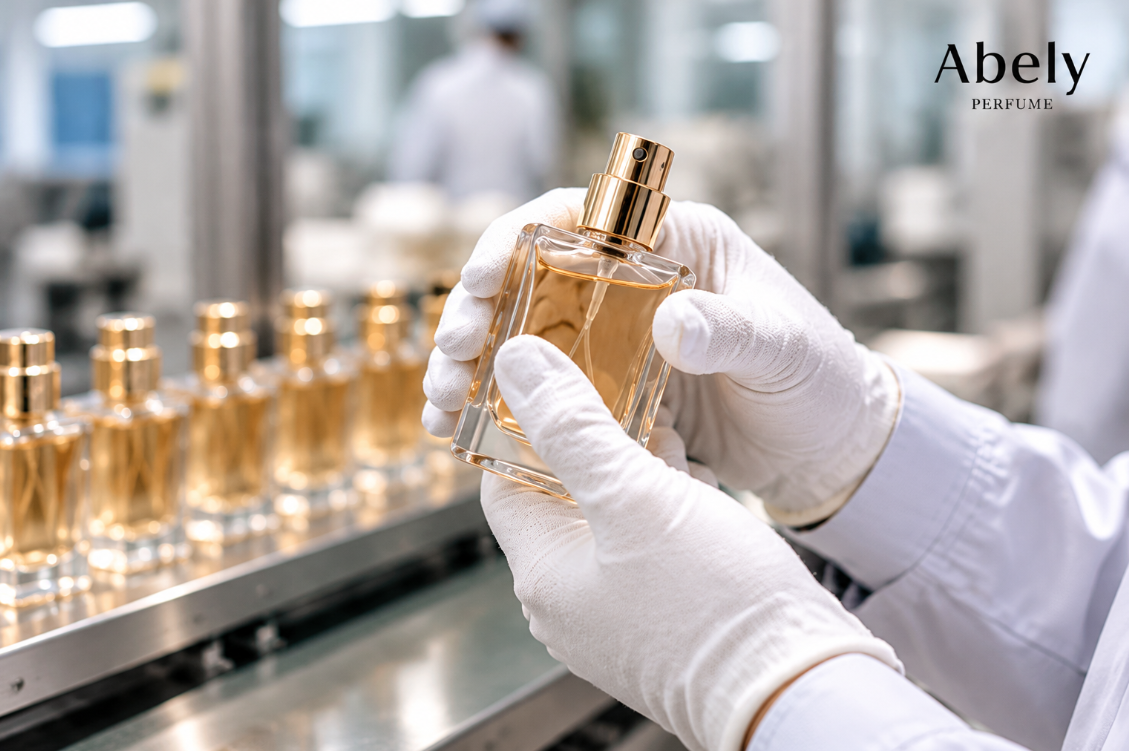
After filling and sealing, wipe the bottle dry and check the neck, pump base, actuator, collar, and cap area. There should be no liquid marks, no tilted sprayer, and no visible gap.
This step helps identify obvious bottle sealing proble
ms early. If several samples show wet marks after operators seal the bottle, review the crimping force, screw torque, pump size, or gasket position.
2. Inversion Leak Test
An inversion leak test can be used to assess leakage under a defined orientation. Fill and assemble the perfume bottle according to the approved test procedure, clean and dry its exterior, and position it in the specified orientation. After the designated test period, inspect the bottle neck and closure area for visible leakage.
The test duration, orientation, temperature, and acceptance criteria should be established according to the packaging design and customer requirements. A passing result under one condition does not automatically demonstrate leak resistance under every storage or transportation condition.
3. Vacuum Leak Test
A vacuum leak test checks whether the glass bottle seal leaks under controlled pressure. Place the approved sample in the chamber, apply vacuum, hold, and observe leakage.
Continuous bubbles near the neck, pump, or collar usually mean the bottle sealing is weak. Record the pressure level where leakage starts. This helps the factory judge whether the problem comes from the bottle, the pump, or the process used to seal the bottle.
4. Controlled Pressure Testing Where Applicable
Certain packaging designs may require additional pressure-related evaluations, depending on the closure structure, intended use, and customer specifications. These tests should be performed only with suitable equipment and an established procedure that accounts for the risks associated with glass containers and alcohol-based fragrances.
Test conditions and acceptance criteria should be
agreed upon before testing. If a sample fails, investigate the component compatibility, sealing interface, and assembly settings rather than simply increasing crimping force or tightening torque. Excessive force may damage the bottle neck, deform the closure, or compromise the perfume pressure sealing integrity.
5. Temperature and Transport Simulation
Perfume bottles may face heat, cold, vibration, and impact during shipping. A package that passes at room temperature may still fail when liquid expands or materials shrink. Place sealed bottles in warm and cool conditions, then check for seepage.
Vibration or drop impact can loosen caps, damage collars, or press the sprayer. Good bottle cap sealing protects the pump, while packaging limits bottle movement. If leakage appears after vibration, review both bottle sealing and carton structure.
6. Pump Function and Cap Fit Test
Press the pump several times and check whether it sprays evenly, returns smoothly, and stays dry around the actuator. Then close and remove the cap repeatedly. The cap should not activate the sprayer or pull the pump upward.
A bottle may pass the glass bottle seal test but leak if the cap presses the actuator. Reliable bottle cap sealing should protect the product without creating extra pressure on the pump.
How Abely Supports Leak-Proof Perfume Packaging
Reliable leak resistance depends on more than the quality of an individual component. The bottle neck, spray pump, closure structure, and assembly method must be compatible with one another.
For fragrance brands and filling factories developing new packaging, these details should be considered before mass production. Abely Perfume supports the development of glass bottles, caps, sprayers, collars, and related packaging components, helping customers coordinate component specifications and review packaging compatibility during development.
Confirming the selected component combination and appropriate testing requirements before bulk production can help identify potential issues earlier and reduce the risk of avoidable assembly problems.

Conclusion
Leak-proof perfume packaging depends on the full system. By testing bottle sealing, inversion performance, vacuum resistance, perfume pressure sealing, pump function, glass bottle seal quality, and bottle cap sealing, brands can reduce leakage risk before mass production.
If you have any needs, feel free to contact us.